WordPress vs Custom Development: Choosing the Right Platform for UAE Digital Growth
Key Takeaways
- WordPress allows fast deployment and flexible content updates.
- Custom builds offer full control over functionality and design.
- Performance depends on coding structure and hosting quality.
- Security practices vary between platforms and maintenance levels.
- Integration requirements influence development decisions.
- Conversion-focused layouts increase engagement and ROI.
- Mobile-first design is essential for UAE audiences.
- Agencies must understand business goals, not just design trends.
- Long-term scalability matters more than short-term cost savings.
Businesses across Dubai and the UAE often face one major decision before launching or upgrading a website: should they use WordPress or invest in a fully custom-built platform? The right choice depends on business goals, scalability needs, budget, performance expectations, and long-term digital growth plans. A website is no longer just an online presence. It is a business tool that drives sales, supports customer service, builds brand authority, and improves marketing performance. Choosing the wrong development approach can lead to limitations, high maintenance costs, or poor user experiences.
This guide explains how both platforms work, compares their strengths, and helps companies select the right development approach based on real business requirements rather than trends.
Plan Your Website Platform Before You Build
Why UAE Businesses Must Compare Development Platforms Carefully
Businesses in Dubai operate in competitive markets where website performance directly affects revenue and brand visibility. A platform decision influences everything from page speed and SEO performance to content management and customer engagement.
Companies often pick e-commerce platforms based on hype rather than how they fit their unique business model. Check our detailed platform comparison. Whether you’re running a product store, service booking site, or scaling an enterprise setup, the wrong choice locks in roadblocks for growth. DigiDesire audits your needs first for scalable, Dubai-ready solutions.
A structured comparison allows organizations to evaluate scalability, maintenance costs, integration requirements, and performance expectations. Understanding these factors ensures the website supports long-term growth rather than temporary needs.
Understanding WordPress Development
WordPress is widely used because it offers flexibility and a user-friendly interface. Businesses can publish content easily without technical skills. Thousands of themes and plugins allow companies to build websites quickly.
WordPress works well for marketing websites, corporate profiles, blogs, and small e-commerce platforms. Its dashboard allows teams to update content, images, and landing pages without developer support.
Advantages include:
- Fast development timelines
- Lower initial costs
- Easy content editing
- Large global support community
However, plugin dependency and performance optimization require careful management to maintain speed and security.
Understanding Custom Web Development
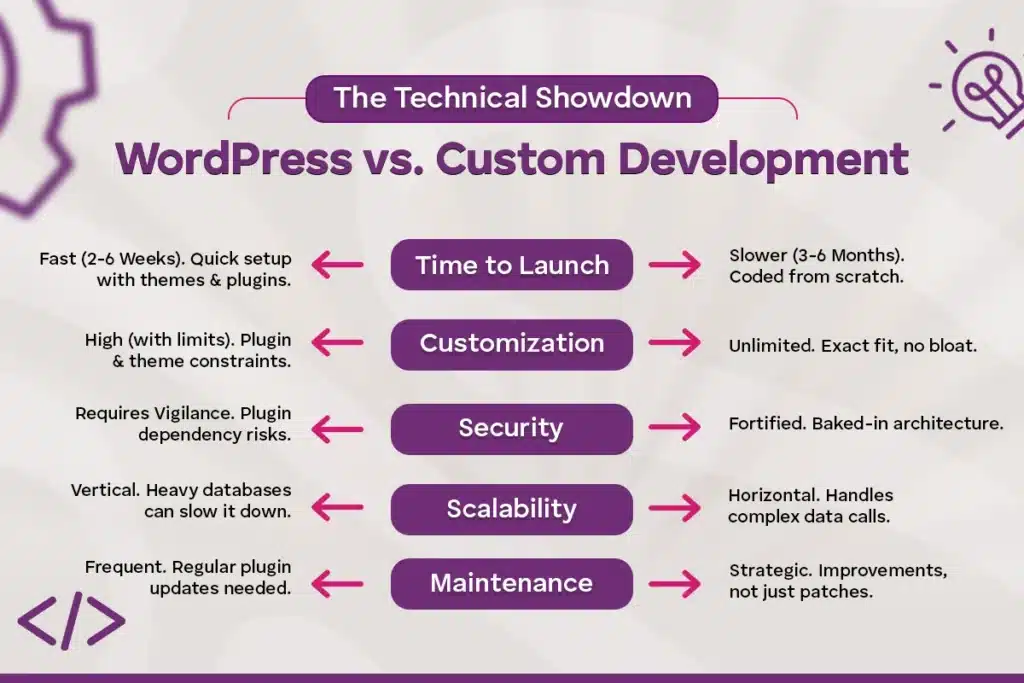
Agencies like a web development company in Dubai often opt for custom solutions to match their unique workflows. This approach gives them complete control over features tailored to specific client needs, rather than relying on generic templates.
Custom solutions allow advanced integrations, complex dashboards, and tailored performance optimization. Businesses managing enterprise systems or large-scale platforms often benefit from this approach.
Although custom builds require higher investment and longer development timelines, they provide flexibility for future expansion. Businesses planning rapid growth or specialized functionality may find custom solutions more sustainable.
Platforms Compared Based on Real Business Needs
When Platforms compared using real-world scenarios, the decision becomes clearer. Marketing-driven businesses often require strong content management capabilities, while enterprise platforms prioritize integration and scalability.
Examples include:
- Service businesses focusing on lead generation.
- Online stores require advanced checkout systems.
- SaaS platforms need secure dashboards.
- Agencies showcasing portfolios and case studies.
Instead of choosing based on trends, businesses should align technical architecture with operational requirements and user expectations.
Performance and Speed Considerations
Website speed directly impacts user satisfaction and search visibility. Slow pages reduce engagement and increase bounce rates. Fast websites improve both user experience and SEO performance.
Performance improvements involve:
Optimizing Images and Media Assets
Large images and uncompressed media files slow down websites and increase loading time. Optimization involves compressing images without losing quality, using modern formats like WebP, and loading media only when needed (lazy loading). Properly sized visuals improve speed, reduce bandwidth usage, and create a smoother user experience across devices.
Using High-Performance Hosting
Website hosting plays a major role in performance and reliability. High-performance hosting provides faster servers, optimized databases, built-in caching, and strong uptime guarantees. This ensures pages load quickly, even during high traffic periods,s and supports better search visibility and user satisfaction.
Reducing Unnecessary Scripts
Extra scripts from plugins, tracking tools, or poorly written code can slow down a website. Removing unused features, minimizing third-party scripts, and combining files where possible help reduce page load times. A cleaner script structure improves performance and prevents technical conflicts.
Implementing Efficient Coding Structures
Efficient coding means writing clean, lightweight, and well-organized code that performs tasks without unnecessary complexity. Developers use optimized frameworks, proper database queries, and structured layouts to improve speed and scalability. Efficient code makes websites faster, easier to maintain, and more secure over time.
Security Requirements for UAE Business Websites
Businesses handling customer data must prioritize security. Both WordPress and custom solutions require strong security practices, including encryption and regular updates.
Security best practices include:
HTTPS Implementation
HTTPS protects the connection between the user and the website by encrypting data through an SSL certificate. This means sensitive information such as passwords, personal details, and payment data cannot be easily intercepted by hackers. Search engines also prefer secure websites, so HTTPS helps improve search visibility and builds user trust. A properly configured HTTPS setup includes secure certificates, automatic renewals, and redirecting all HTTP pages to HTTPS versions.
Secure Authentication Systems
Secure authentication ensures that only authorized users can access restricted areas such as admin dashboards or customer accounts. This includes strong password policies, two-factor authentication (2FA), encrypted login forms, and role-based access control. By limiting access and adding extra verification steps, websites reduce the risk of unauthorized logins, data breaches, and account misuse.
Regular Backups
Regular backups create copies of website data, files, and databases so they can be restored quickly if something goes wrong. Issues like hacking, server failure, or accidental deletion can cause data loss, and backups ensure business continuity. Automated daily or weekly backups stored in secure off-site locations help businesses recover quickly without losing important content or customer information.
Firewall Protection
A website firewall acts as a security barrier between the site and potential threats from the internet. It monitors incoming traffic and blocks malicious activity such as hacking attempts, spam bots, and suspicious requests. Firewalls can also prevent DDoS attacks and filter harmful traffic before it reaches the server, improving both security and website performance.
WordPress security depends heavily on plugin management and timely updates. Custom solutions allow developers to implement tailored security frameworks aligned with business-specific risks.
Cost Comparison and Long-Term Investment
Budget planning should consider more than initial development expenses. WordPress often has lower upfront costs because templates and plugins reduce design time. However, ongoing licensing and maintenance may increase expenses over time.
Custom builds require a higher initial investment but may reduce long-term costs by eliminating unnecessary features. Businesses should evaluate:
- Development expenses
- Maintenance requirements
- Hosting infrastructure
- Future scalability costs
Strategic financial planning helps avoid unexpected redevelopment expenses.
Conversion Strategy and Content Flexibility
Marketing success depends on clear messaging and structured content. Businesses need platforms that allow quick updates and campaign adjustments without technical delays.
Effective conversion optimization for small business website strategies includes:
Prominent Calls-to-Action
Prominent calls-to-action (CTAs) guide visitors toward the next step you want them to take, such as contacting your business, requesting a quote, or making a purchase. A strong CTA uses clear wording, visible buttons, and strategic placement on important pages like the homepage, service pages, and blog posts.
Good CTAs reduce confusion and help users move through the website smoothly. They should stand out visually, use action-focused language, and match the visitor’s intent so users feel confident taking action.
Simple Lead Capture Forms
Lead capture forms collect important user information, such as name, email, or business needs. Keeping forms simple increases the chances that visitors will complete them. Long or complicated forms often cause users to leave without submitting.
The best approach is to ask only for essential details, use clear labels, and make the form easy to complete on both desktop and mobile devices. Adding trust signals like privacy notes or secure form icons can also encourage users to share their information.
Customer Testimonials
Customer testimonials build trust by showing real experiences from past clients. When potential customers see positive feedback, they feel more confident in your services. Testimonials can include written reviews, star ratings, case study summaries, or short video clips. Placing testimonials near CTAs or service descriptions helps reinforce credibility at the moment users are deciding whether to take action. Authentic and specific testimonials are more effective than generic praise.
Clear Service Descriptions
Clear service descriptions help visitors understand exactly what your business offers and how it solves their problems. Each service page should explain the benefits, process, expected results, and who the service is best for. Avoid technical jargon and focus on simple, easy-to-understand language that highlights real value.
Well-structured descriptions with headings, short paragraphs, and supporting visuals make it easier for users to compare options and decide which service fits their needs.
Strong content flexibility ensures marketing teams can respond quickly to changing market demands while maintaining consistent messaging.
Mobile Optimization and Responsive Design
Mobile traffic dominates browsing behavior across the UAE. Businesses must ensure consistent experiences across smartphones, tablets, and desktops. Responsive web design services help maintain usability regardless of screen size.
Mobile-first practices include:
- Touch-friendly navigation
- Fast-loading images
- Flexible layouts
- Simplified checkout systems
Mobile optimization improves engagement and reduces bounce rates while supporting better search engine rankings.
Need Help Selecting the Right Development Approach?
Scalability and Future Business Expansion

Businesses planning growth must consider long-term scalability. Custom platforms provide flexibility to add advanced features and handle increasing traffic volumes. WordPress can also scale effectively with optimized hosting and structured development practices.
Multilingual Content
Multilingual content helps businesses reach a wider audience across different regions and cultures. In markets like the UAE, customers often speak multiple languages, such as Arabic and English, so offering content in more than one language improves accessibility and trust. It allows users to understand services clearly without confusion.
Proper translation also helps with local SEO, making websites more visible in regional searches. When done correctly, multilingual content creates a personalized experience and increases engagement with diverse audiences.
Regional Expansion
Regional expansion focuses on adapting your website for different locations and markets. Businesses may add location-specific pages, local contact details, and region-based services to connect with new customers. This approach helps companies grow beyond a single city and reach clients across the Middle East or globally.
It is the right approach that Regional targeting also improves search rankings for local keywords and ensures that users see relevant content based on their geographic needs. A well-planned expansion strategy supports long-term digital growth.
Advanced Analytics Integration
Advanced analytics integration allows businesses to track user behavior, website performance, and conversion data more accurately. Tools like heatmaps, traffic reports, and user journey tracking help identify what visitors like and where they drop off. With clear data insights, businesses can improve design, adjust content strategies, and optimize marketing campaigns. Analytics also supports better decision-making because teams can measure real results instead of guessing. Continuous monitoring ensures that websites evolve based on actual user actions.
Growing Product Catalogs
Growing product catalogs require websites that can handle increasing numbers of products or services efficiently. As businesses expand, they need organized categories, strong search features, and easy filtering options so users can find items quickly.
A scalable website structure ensures smooth navigation even when hundreds or thousands of products are listed. Clear product descriptions, high-quality images, and consistent layouts improve the shopping experience and support higher conversion rates.
Managing a growing catalog also requires strong backend systems to keep inventory and content updated. So thatPlanning for future growth prevents costly redesigns as business operations expand.
Integration with Marketing and Business Systems
Modern websites integrate with CRM platforms, analytics tools, and marketing automation software. Custom solutions allow complex integrations tailored to specific workflows.
WordPress offers plugins for popular integrations, making it suitable for many businesses. However, companies with unique operational systems may require custom-built connectors.
Key integrations include:
- Customer relationship management
- Email marketing tools
- Payment gateways
- Inventory systems
Strong integration improves efficiency and data-driven decision-making.
Maintenance and Technical Support Requirements
Websites require continuous monitoring to maintain performance and security. WordPress sites need regular plugin updates and compatibility checks. Custom solutions require developer oversight for upgrades and optimization.
Maintenance includes:
- Security monitoring
- Performance testing
- Software updates
- Backup management
Planning for ongoing support ensures long-term stability and prevents downtime.
Design Flexibility and Branding Control
Businesses seeking unique branding benefit from tailored interfaces aligned with modern website design principles. Clean layouts, clear typography, and logical navigation improve usability and brand perception.
Custom builds provide full creative control, while WordPress themes offer structured frameworks that can be customized. Design should prioritize clarity, speed, and accessibility rather than complex visuals that reduce performance.
Identifying the Right Agency Expertise
To choose web design agency UAE providers effectively, businesses should evaluate experience, communication style, and technical expertise. Agencies must demonstrate proven success with both WordPress and custom projects.
Evaluation criteria include:
Portfolio Quality
Portfolio quality reflects the real work a web design agency has delivered for past clients. A strong portfolio should show diverse industries, modern designs, responsive layouts, and functional features such as booking systems or e-commerce stores. Reviewing live websites, not just screenshots, helps you evaluate speed, usability, and performance. High-quality portfolios also demonstrate problem-solving ability, showing how the agency meets specific business goals rather than only focusing on visuals.
Technical Certifications
Technical certifications prove that an agency’s team has verified skills in web technologies, platforms, and industry standards. Certifications from platforms like WordPress, Google, or recognized development organizations indicate professional training and updated knowledge.
These credentials show that developers understand best practices in coding, SEO structure, security, and performance optimization. While certifications alone do not guarantee success, they add credibility and reduce the risk of working with inexperienced providers.
Post-Launch Support
Post-launch support refers to the ongoing help an agency provides after your website goes live. This includes bug fixes, performance monitoring, security updates, content changes, and technical troubleshooting. Continuous support ensures that your website stays functional, secure, and updated as technology evolves. Agencies offering long-term maintenance packages help businesses avoid downtime and maintain consistent performance, which is essential for customer trust and search rankings.
Transparent Pricing Structures
Transparent pricing structures clearly outline what services are included, how much each feature costs, and whether there are any recurring fees. A reliable agency provides detailed proposals covering design, development, hosting, maintenance, and future updates.
Yes, clear pricing prevents misunderstandings and helps businesses plan budgets effectively. Transparency also builds trust because clients understand exactly what they are paying for and can compare services fairly between different agencies.
Selecting the right development partner ensures consistent performance and long-term collaboration.
Automation and Smart Website Features
Automation tools improve customer interaction and operational efficiency. Websites now include chatbots, automated booking systems, and smart forms that reduce manual effort.
Automation benefits include:
- Faster response times
- Improved customer satisfaction
- Reduced operational workload
- Enhanced data collection
Businesses adopting automation improve engagement while streamlining internal processes.
Digital Business Opportunities Through Modern Platforms
Innovative platforms unlock new digital business opportunities for UAE companies. Websites now serve as full-service business tools supporting online sales and automated services.
Examples include:
- Subscription-based services
- Digital product distribution
- Online appointment booking
- Automated lead nurturing systems
Expanding online capabilities allows companies to reach international markets and diversify revenue streams.
Making the Final Decision Between WordPress and Custom
Choosing the right platform requires evaluating goals, budget, technical needs, and expected growth. Businesses should analyze operational workflows and marketing strategies before deciding.
Decision factors include:
- Development timeline
- Required functionality
- Content management needs
- Integration complexity
- Future scalability expectations
A well-informed decision ensures the platform supports business growth rather than limiting future expansion.
Build a Scalable Website That Supports Long-Term Growth
FAQs
WordPress works well for startups needing fast launches and easy content management, while custom builds suit complex systems.
Not always. Although initial costs are higher, custom solutions may reduce ongoing licensing expenses.
Yes, with optimized hosting, performance tuning, and structured development practices.
Review portfolio quality, communication style, technical expertise, and ongoing support services.
Both platforms can rank well when optimized with fast loading speeds, mobile responsiveness, and strong content structure.
Very important because most users browse on smartphones and expect seamless mobile experiences.
Security depends on implementation. Custom builds allow tailored frameworks, while WordPress requires regular updates.
Clear navigation, fast loading speed, strong CTAs, and structured user journeys improve conversions significantly.
Table of Contents
Categories
Featured Posts
-

Why The Right Keyword Research Is Crucial for UAE Businesses
March 31, 2026 -
Web Development Services in Dubai: Choose a Right Partner
March 30, 2026 -
How AI Is Transforming Google Ads Campaign Strategies in Dubai
March 26, 2026 -
Essential Website KPIs: Web Development Company in Dubai Insights
March 15, 2026 -
Agency vs. Freelancer: Finding the Right Web Development Services in Dubai for Your New Venture
March 14, 2026