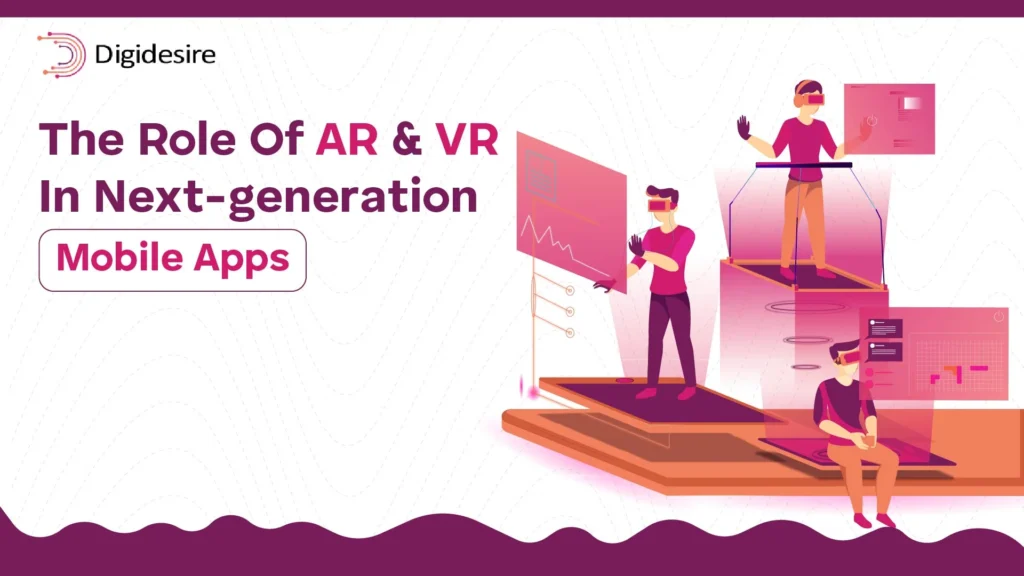
Building for a Metaverse-Ready Economy: The Strategic Role of AR & VR in Dubai
Key Takeaways:
- The Shift: Dubai is transitioning from a “Smart City” to a “Metaverse-Ready Economy.” Mobile apps are no longer just flat interfaces; they are spatial experiences.
- The Business Case: Augmented Reality (AR) and Virtual Reality (VR) are shifting from gaming novelties to critical business tools. Real estate apps now require virtual walkthroughs, and retail apps demand “Try-Before-You-Buy” functionality to reduce return rates.
- The Trust Layer: High-tech visuals are useless without security. Integrating the UAE Pass enables seamless, verified transactions within these immersive environments, backed by Federal Decree-Law No. 46 of 2021.
- The Challenge: Building these apps requires Custom Android/iOS development and rigorous Augmented Reality testing. Off-the-shelf templates will fail to deliver the 1ms latency performance that Dubai users expect on 5G networks.
- Your Move: To dominate in 2026, you need a UAE Pass-certified development partner who understands both immersive tech and local compliance.
Introduction: From “Tap and Scroll” to “Walk and Explore”
In the past, having a bug-free app was an achievement. Now, it is just the minimum requirement. To succeed in Dubai in 2026, your app needs to do far more than just look good.
With the launch of devices like the Apple Vision Pro and the Meta Quest 3, consumer behavior in the UAE has evolved. The “flat” internet, where we stare at 2D screens, is being replaced by the “Spatial” internet. Users are no longer content with viewing static images of a product or a property. They want to experience it. They want to place that luxury sofa in their living room in Downtown Dubai before buying it to ensure it matches the drapes. They want to walk through that off-plan penthouse in Palm Jebel Ali before signing the cheque, feeling the scale of the balcony and the height of the ceilings.
For business leaders and CTOs in Dubai, this presents a unique challenge. How do you transition your mobile strategy from “Transactional” to “Immersive”?
The role of AR & VR in next-generation mobile apps is not just about flashy visuals; it is about reducing friction. It is about giving the user the confidence to make decisions. When a customer can visualize a product perfectly, return rates drop. When an investor can tour a property virtually, sales cycles shorten. Recent data suggests that by 2026, 25% of people will spend at least one hour a day in the Metaverse or immersive environments. If your brand isn’t there, you are invisible to a quarter of the market.
However, the “Next-Generation” app requires more than just 3D graphics. It requires a layer of trust. This is where the integration of UAE Pass becomes a game-changer. Imagine touring a virtual property and signing the tenancy contract instantly with a verified digital identity, all without leaving the app.
This guide explores how AR and VR development companies are reshaping Dubai’s digital landscape and how you can leverage these technologies to build an app that defines 2026.
Don't Build Yesterday's App
The Dubai market demands immersion. We build award-winning mobile experiences that combine high-performance AR/VR with secure UAE Pass integration.

From Gaming to Business: Real-World Augmented Reality Examples
For years, AR was synonymous with Pokémon GO. Today, in Dubai, it is synonymous with ROI (Return on Investment).
Leading enterprises are using AR to bridge the gap between the digital and physical worlds. As a business leader, you need to know which use cases are actually driving revenue. Here are the most impactful augmented reality examples currently deployed in the UAE market.
1. Real Estate: The “Remote Investment” Tool
Dubai’s real estate market relies heavily on international investors.
- The Old Way: Sending PDFs and 2D floor plans via email.
- The AR/VR Way: A dedicated mobile app where the investor opens the camera and sees a 3D hologram of the tower rising from their coffee table. They can zoom in on the balcony, check the view, and even toggle between “Day” and “Night” modes.
- Impact: Developers using immersive apps report a 30% increase in off-plan sales to remote buyers.
2. Retail & E-Commerce: The “Virtual Try-On.”
Return rates are the silent killer of e-commerce profits.
- The Application: Luxury fashion brands and furniture giants (like IKEA or Home Centre) are integrating AR into their apps. A user points their phone at their feet to “try on” sneakers or points it at their wall to see if a painting fits.
- Technical Note: This requires precise LiDAR integration to ensure the scale is 100% accurate. If a virtual sofa looks even 10% smaller than reality, the customer will return it. This is why DigiDesire prioritizes millimeter-precision tracking; by mastering the depth sensors in modern smartphones, we ensure the digital product fits perfectly into the physical world, eliminating “buyer’s doubt.
3. Tourism & Culture: The “Digital Guide.”
The Department of Economy and Tourism (DET) has set high standards.
- The Application: Museums and heritage sites use AR apps to overlay historical data on physical ruins. Point your phone at a fort in Al Fahidi, and the app reconstructs how it looked in the 1800s.
H2: The “Trust Layer”: Integrating UAE Pass in High-Tech Apps
Here is the secret sauce that most developers miss.
You can build the most beautiful VR real estate app in the world, but if the user has to print a PDF, sign it, scan it, and email it back to close the deal, you have failed. The experience is broken.
Why UAE Pass & Dubai Mobile Apps Are Inseparable
UAE Pass is the national digital identity and signature solution for the UAE. In next-generation apps, it serves as the bridge between “Virtual Interest” and “Real Transaction.”
The Seamless User Journey
- Exploration (VR): The user puts on a headset or uses their phone to tour a villa in Palm Jumeirah.
- Decision (AR): They use AR to visualize how their furniture would look in the space.
- Transaction (UAE Pass): They decide to rent. The app prompts: “Sign Tenancy Contract with UAE Pass?”
- Completion: The user authenticates via FaceID. The document is digitally signed and legally binding.

The Necessity of a Certified Partner
Integrating UAE Pass is not as simple as adding a “Login with Google” button. It requires strict adherence to cryptographic standards and security protocols set by the Telecommunications and Digital Government Regulatory Authority (TDRA). This is why you must work with a UAE Pass-certified development partner. They ensure that your app’s security architecture meets the government’s rigorous standards, protecting both you and your users from fraud.
Building for Performance: Custom Android & iOS Development
One of the most common questions we get is: “Can we use a cross-platform tool like Flutter or React Native for AR apps?”
The honest answer? It depends, but usually, no.
The “Frame Rate” Problem
Augmented Reality is computationally expensive. It requires the phone’s camera, gyroscope, accelerometer, and GPU to work in perfect harmony.
- If the app lags by even 50 milliseconds, the virtual object “drifts” (slides away from its position).
- This breaks the illusion and frustrates the user.
Why Custom Android App Development Wins
To achieve “Business Grade” AR, you often need Custom Android app development (using Kotlin/Java) and Native iOS development (using Swift).
- Hardware Access: Native apps have direct, low-level access to the device’s hardware (like the Neural Engine for AI processing).
- Battery Optimization: AR drains battery fast. Native code is far more efficient than cross-platform wrappers, ensuring your user’s phone doesn’t overheat during a virtual tour.
Stability: When you are dealing with high-fidelity 3D models (which might be 100MB+ in size), native apps handle memory management significantly better.
Performance is Non-Negotiable
Don’t let lag kill your conversion rate. We specialize in Custom Android and iOS development tailored for high-performance AR/VR applications.
Why “Augmented Reality Testing” Can Make or Break Your App
Imagine a customer uses your makeup app to try on a lipstick. Due to a bug, the lipstick appears on their forehead instead of their lips. They will screenshot it, post it on social media, and laugh. Your brand reputation takes a hit.
This is why augmented reality testing is a specialized discipline. It is fundamentally different from testing a standard 2D app.
The Variables of Reality
In a normal app, the background is white. In an AR app, the background is the real world.
- Lighting Conditions: Does the app work in a dim bedroom? Does it work in bright Dubai sunlight?
- Surface Detection: Can the app distinguish between a wooden floor and a white carpet?
- Motion Blur: What happens if the user moves their hand quickly?
Our Testing Protocol
A professional AR VR development company will have a dedicated “Reality Lab” to test these scenarios. At DigiDesire, we don’t just test in a lab; we stress-test apps in the actual environments they will be used in, from the bright, reflective glass towers of Business Bay to the low-light interiors of luxury boutiques. This ensures that the AR anchors remain stable regardless of the environment.
- Device Fragmentation: Testing on high-end iPhone 16 Pro Max vs. mid-range Androids.
- Environment Stress Tests: Testing in chaotic visual environments to ensure the AR anchors hold firm.
- Heat Maps: Analyzing where users look during a VR experience to optimize the UI placement.
How to Choose the Best Mobile App Development Company in Dubai

The market is flooded with agencies claiming they can do “Metaverse” or “AI.” How do you filter the noise and find a partner capable of delivering a 2026-ready product?
Here is a checklist for vetting your development partner:
1. Look for “UAE Pass” Certification
This is your first filter. If they cannot integrate UAE Pass, they are building an “Entertainment App,” not a “Business App.” A UAE Pass certified development partner proves they understand the local digital ecosystem.
2. Ask for Specific AR/VR Case Studies
Don’t settle for generic portfolios. Ask:
- “Show me an app where you used LiDAR technology.”
- “Show me a project where you reduced the 3D model size without losing quality.”
- “How do you handle occlusion?” (Occlusion is when a real object, like a chair, blocks the virtual object. If they don’t know what this is, run.
3. Check Their “Spatial UI” Expertise
Designing for AR/VR is not like designing for a screen. Buttons cannot be in the corners; they must float in 3D space. The best mobile app development company in Dubai will have UX designers who specialize in Spatial Computing.
4. Post-Launch Support
AR libraries (like ARKit and ARCore) are updated every few months. Your app will break if it is not maintained. Ensure your partner offers a robust maintenance package (SLA) to keep your immersive features running smoothly.
Conclusion: The Future is Immersive and Verified
The Dubai Universal Blueprint for Artificial Intelligence and the D33 Agenda have fired the starting gun.
We are in a unique window of time. Right now, launching a high-fidelity AR/VR app is a differentiator. It puts you on the front page of news sites. It wows investors. It captures market share.
But in 18 months? It will be the baseline.
By 2027, a real estate app without a VR tour will feel as broken as a website without mobile optimization feels today. An e-commerce app without AR try-on will feel risky to consumers.
The infrastructure is ready. The 5G networks in Dubai are among the fastest in the world. The legislation (UAE Pass) is robust and business-friendly.
The only variable left is Action.
Will you build a “Legacy App” that looks backward at the last decade of design? Or will you build a “Spatial Experience” that looks forward to the next decade of revenue?
The choice is yours. But remember: In the spatial era, if you aren’t visible, you don’t exist.
Ready to Build the Future?
Let’s discuss your project. As a leading AR VR development company and UAE Pass-certified partner, we have the tools to turn your vision into a market-leading reality.
FAQs
Hiring a certified partner ensures your app is fully compliant with UAE digital security laws. It allows you to integrate UAE Pass for secure logins and digital signatures, which builds immense trust with your users and enables legally binding transactions within the app.
The highest ROI examples in Dubai currently include:
- Virtual Property Tours: Allowing investors to walk through off-plan projects.
- Virtual Try-On: For fashion, jewelry, and cosmetics to reduce returns.
- Interactive Menus: For high-end restaurants showing 3D food models.
Custom development allows engineers to write "Native Code" that speaks directly to the phone's hardware (Camera, GPU, Sensors). Cross-platform tools often add a layer of code that slows down performance, causing the AR visuals to lag or jitter, which ruins the user experience.
Yes, it does. Developing 3D assets and programming complex spatial logic requires more time and specialized skill sets than standard 2D apps. However, the investment is often recovered through higher conversion rates and increased brand engagement.
AR apps must interact with the unpredictable real world. Rigorous testing ensures your digital objects don't disappear when the lights go down or float away when the user moves. Proper testing protects your brand from releasing a buggy, embarrassing product.
Table of Contents
Categories
Featured Posts
-

Essential Website KPIs: Web Development Company in Dubai Insights
March 15, 2026 -
Agency vs. Freelancer: Finding the Right Web Development Services in Dubai for Your New Venture
March 14, 2026 -
AI Ads in Dubai: Smart Strategy or Risky Move for Revenue Growth?
March 13, 2026 -
Why Are Digital Marketing Trends Shifting Fast?
March 12, 2026 -
Proven Tactics for Improving Your Google Ads Quality Score
March 11, 2026